Storm Damaged Tree Removal in Teddington
When a strong wind, heavy rain, or sudden storm leaves a tree leaning, split, or dangerously unstable, fast and careful action matters. Storm damaged tree removal in Teddington is not just about clearing debris; it is about making a property safe again, protecting neighbouring homes, keeping access open, and reducing the risk of further collapse. In a place like Teddington, where mature trees are part of the character of many streets and gardens, storm damage can create urgent problems for homeowners, landlords, businesses, and property managers alike.
Local conditions can make tree damage especially awkward to deal with. Front gardens, shared drives, narrow side access, boundary fences, parked vehicles, and limited storage space all affect how quickly and safely a damaged tree can be removed. Whether the tree has fallen across a driveway, dropped limbs into a garden, or become unsafe after high winds, a local arboricultural team can assess the situation and carry out the work with the right equipment and approach.
We help customers in Teddington deal with storm-affected trees in a practical, calm, and efficient way. If you are dealing with a tree that is hanging over a roof, blocking a pathway, or threatening a wall, request a free quote and arrange an inspection as soon as possible. The sooner the risk is assessed, the easier it is to prevent additional damage.
Why storm damaged trees need prompt attention

Storm damage is often more serious than it first appears. A tree may still be standing after a storm, but that does not mean it is stable. Hidden splits in the trunk, torn roots, cracked limbs, and loosened soil around the base can all make the tree unsafe. What looks like a minor issue from the ground may turn into a full collapse if the next gust of wind arrives.
In Teddington, many gardens feature established trees that have grown over decades. These trees bring shade and privacy, but they can also be more vulnerable during extreme weather because age, size, or previous pruning can weaken their structure. If a tree has lost major limbs or is leaning after a storm, it is important to have it checked quickly rather than waiting to see what happens next.
Storm damaged tree removal in Teddington is commonly needed when a tree is: partially fallen, split at the trunk, uprooted, leaning against a building, blocking access, or dropping broken branches. Even if the tree is not fully down, it may still require urgent removal or sectional dismantling to make the area safe.
Signs a damaged tree may need removal

After severe weather, it is sensible to walk around the property from a safe distance and look for visible changes. Some signs are obvious, while others are easy to miss. A tree that looked healthy before the storm may now have structural damage that only becomes clear when you inspect the trunk, canopy, and roots.
Common warning signs include a fresh lean, exposed roots, cracked bark, large hanging branches, a split stem, soil lifting on one side, or loud creaking sounds in windy conditions. If branches are resting on wires, a fence, a shed, or a neighbouring roof, the situation may need urgent attention. In some cases, it is safer to keep well away and wait for a professional assessment rather than trying to clear it yourself.
It is also worth remembering that broken branches can fall later, even if the weather has calmed. A storm-damaged crown often contains partially detached wood that can shift unexpectedly. For safety, do not climb the tree or attempt to cut large limbs without the proper equipment, training, and fall protection.
What our storm damaged tree removal service includes

Our service is designed to handle storm-related tree problems efficiently while keeping disruption to a minimum. Every situation is different, so the first step is to understand the type of damage, the location of the tree, and any immediate hazards around it. From there, the work can be planned to suit the site and the level of urgency.
Typical work can include a site assessment, making the area safe, sectional dismantling of unstable trees, removal of broken limbs, cutting and lowering dangerous parts in controlled sections, clearing timber and arisings, and removing debris from access routes or garden areas. If a tree has fallen across a driveway or path, we aim to restore safe access as quickly as possible.
Depending on the damage and the access available, the tree may need to be removed in pieces rather than felled in one go. This is common in residential areas of Teddington where gardens are enclosed, properties are close together, or there is limited room for machinery. Careful sectional removal helps protect nearby structures, boundary features, and planting.
Why local knowledge matters in Teddington
Teddington has a mix of housing styles, from period terraces and semi-detached homes to larger family properties, flats, and small commercial premises. This variety means no two tree removals are quite the same. A tree in a narrow rear garden in one street may require a very different approach from one affecting a shop frontage, office car park, or shared access lane elsewhere in the area.
Local knowledge helps with planning the work properly. A team familiar with Teddington understands the practical realities of parking, restricted access, shared boundaries, and the need to work tidily in neighbourhoods where pedestrians, cyclists, and neighbouring residents may be close by. It also helps to know that many properties have mature planting and tight garden layouts, which often means using smaller equipment, rope-based dismantling, or hand-carrying timber through limited access points.
For customers in and around Teddington, hiring a local arborist can save time and reduce stress. If you need tree removal after storm damage, a nearby team can often respond more quickly, assess the situation in person, and recommend the safest practical option without delay. Fast local support can make all the difference when a tree becomes a hazard overnight.
How the removal process works
Step 1: Initial assessment
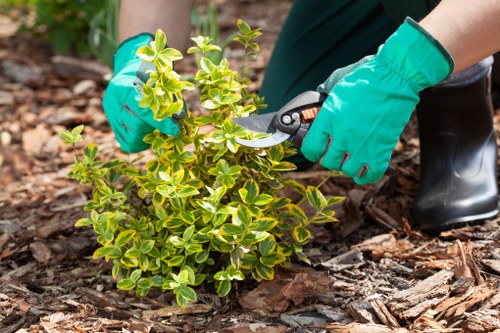
Every storm-damaged tree is assessed before any cutting begins. The aim is to understand whether the tree can be made safe by removing part of it, or whether full removal is the best option. During the assessment, the arborist looks at the extent of the damage, the tree species, its size, the condition of the roots, and any risks to nearby people or property.
This stage is especially important if the tree is partially suspended or under tension. Storm-damaged wood can behave unpredictably, and a cut in the wrong place can make the tree shift or collapse. By planning the dismantling carefully, the work can be carried out in a controlled and safe sequence.
Step 2: Making the area safe
Before cutting starts, the work zone is made secure. This may involve keeping people away from the affected area, moving vehicles if possible, and identifying hazards such as glass, broken fencing, power lines, or unstable branches overhead. When access is tight, careful sequencing is needed so that debris does not block exits or create new hazards.
Step 3: Sectional removal or felling
If the tree is standing but unsafe, it may be dismantled in sections. Large limbs are removed first, then the main stem is reduced in manageable pieces. If the tree is already on the ground, the work may involve breaking it down and removing the trunk and branches in a controlled way. The method chosen depends on the tree’s condition and the space available around it.
Step 4: Clearing and tidying
Once the tree has been removed, the area is cleared of debris and the site is left tidy. Depending on the agreed scope of work, this can include stacking or removing wood, chip, and branch material. If there is a stump left in place, we can discuss whether stump grinding or a separate follow-up service is needed.
Common storm-related tree problems we handle

Storms can affect trees in many different ways. Some are dramatic and obvious, while others are subtle but still dangerous. Customers often contact us after a night of strong winds, but we also see damage after prolonged rain, saturated ground, or a combination of weather conditions that weaken roots and increase the risk of failure.
We regularly assist with trees that have:
- Split trunks or major vertical cracks
- Hanging or partially detached branches
- Uprooting or root plate movement
- Leaning stems caused by wind throw
- Collapsed crowns after limb failure
- Storm damage affecting sheds, fences, garages, and roofs
- Blocked driveways, footpaths, or entrances
If you are unsure whether the tree must be removed completely, a professional inspection can help you decide. In some cases, careful pruning or crown reduction may be enough to remove the immediate danger. In other cases, especially where the trunk or roots are compromised, removal is the safest choice.
Residential and commercial storm damage support
Storm damaged trees affect more than private gardens. In Teddington, local businesses, schools, landlords, managing agents, and community buildings may also face urgent tree-related issues after bad weather. A fallen branch can block access to a car park, damage signage, create a trip hazard, or leave an entrance unsafe for staff and visitors.
For residential customers, the focus is often on restoring peace of mind, protecting the property, and making the garden usable again. For commercial customers, speed, clear communication, and safe working around customers or staff are often top priorities. In both cases, a reliable tree removal service can help keep disruption to a minimum.
We understand that storm damage can be stressful, especially if it happens at night, during a weekend, or just before you need access to the property. That is why our service is geared around practical response, sensible advice, and a safe working method tailored to each site. Contact us today if you need help deciding what to do next.
Access, parking, and site conditions in Teddington
One of the biggest challenges with storm damaged tree removal in Teddington is access. Many local properties have limited side passages, narrow gates, shared pathways, or rear gardens that can only be reached through the house or via a tight side return. These factors can influence how equipment is brought in and how debris is taken out.
Parking can also affect the speed of the job. On-street parking, controlled spaces, and busy local roads may mean that unloading needs to be planned carefully. A local team can assess the approach in advance and decide whether smaller machines, manual handling, or rope-and-pulley methods are the safest way forward.
Where the tree is near neighbouring property, extra care is needed to protect fences, sheds, extensions, and planting borders. In areas with mature gardens and close boundaries, controlled dismantling is often the preferred method because it reduces the risk of accidental impact. Good planning helps the job move smoothly even when the site is awkward.
Typical local considerations
We commonly take into account:
- Narrow access paths and shared entrances
- Limited parking for work vehicles
- Protecting lawns, paving, and borders
- Nearby buildings, conservatories, and extensions
- Overhead obstacles such as cables or branches
- Neighbour awareness and tidy work practices
Preparation checklist for customers
If you are arranging tree removal after a storm, a little preparation can help things run more smoothly. You do not need to do any heavy lifting yourself, and you should never stand under a damaged tree, but a few simple steps can make the site easier to work on.
Before the team arrives, it helps to:
- Keep clear of the damaged area and warn others not to enter it.
- Move vehicles away if it is safe and possible to do so.
- Check whether any cables, fences, or buildings are in immediate danger.
- Close windows near the affected tree if branches could fall.
- Tell us about any access limitations, locked gates, or shared entries.
- Let neighbours know if the tree affects a boundary or shared space.
If the tree is touching a power line or there is any suspicion of electrical danger, stay well away and contact the relevant utility provider before arranging tree work. Safety always comes first.
Pricing factors for storm damaged tree removal
Every tree removal job is different, so the cost depends on the details of the site rather than on a one-size-fits-all rate. The main factors include the size of the tree, how badly it is damaged, whether it is standing or already fallen, and how difficult it is to access the area.
Other elements that can affect pricing are the need for emergency response, whether specialist machinery is required, how much waste must be removed, whether the timber can be left on site, and whether additional work such as stump grinding or fence repairs is needed as a separate task. A tree with extensive lean or tension may also take longer to dismantle safely than a straightforward removal.
For many customers, the most useful thing is a clear explanation of what is included and what might change the scope of the job. That way, you can make an informed decision based on the actual condition of your tree and your property. Request a free quote for a practical, no-pressure assessment.
What can influence the final quote?
The quote may reflect:
- Tree height, spread, and trunk diameter
- Severity and type of storm damage
- Urgency of attendance
- Ease of site access
- Waste removal and disposal needs
- Nearby obstacles or sensitive surfaces
- Whether additional remedial work is required
Why choose a local company for tree removal in Teddington
Choosing a local company can make the process more straightforward from the first call to the final tidy-up. Local teams understand the kinds of properties, roads, and access routes commonly found in the area, and that helps with realistic planning. When a storm has caused damage, customers often want a service that is both efficient and reassuring, without unnecessary delays or confusion.
A nearby arborist is also more likely to be familiar with the practical demands of working in dense residential areas and mixed-use locations. That can mean better coordination, better judgement around access, and a better ability to adapt when weather or site conditions change. If the tree damage involves a shared boundary or a neighbour’s property, a calm and professional approach is especially helpful.
Most importantly, local tree removal is about solving a real problem for a real property, not just cutting wood. The aim is to reduce risk, protect access, and leave the site in a manageable condition so you can move forward. Book your service now if you need prompt help after a storm.
Areas covered around Teddington
We provide storm damaged tree removal in Teddington and the surrounding neighbourhoods. Customers often contact us from nearby residential streets, riverside properties, and local commercial premises where mature trees can become a concern after strong weather. We also regularly work in neighbouring parts of southwest London and the surrounding areas when access and schedule allow.
Nearby locations may include parts of Strawberry Hill, Hampton Wick, Hampton, Twickenham, and Richmond, as well as other local streets and estates close to Teddington. If your property is just outside the centre of Teddington, it is still worth asking whether we can help. The key factors are the tree condition, the access available, and the level of urgency.
Where a tree crosses a boundary or affects more than one property, it can be useful to get the situation assessed promptly so everyone understands the safest next step. This is particularly important in shared gardens, blocks of flats, and properties with communal driveways or access ways.
FAQs about storm damaged tree removal
Do I need the whole tree removed if it has storm damage?
Not always. Some trees can be retained if the damage is limited to certain branches or if pruning can reduce the risk. However, if the trunk is split, roots are lifted, or the tree is leaning significantly, full removal may be the safer option. A site assessment will help determine the best approach.
How quickly can storm damaged trees be dealt with?
Urgent cases are usually prioritised, especially where access is blocked or there is a risk to people or property. Response time depends on the severity of the damage, current demand, and site conditions. If the tree is creating immediate danger, let us know as soon as possible.
Can you remove a tree that has fallen onto a fence or shed?
Yes, in many cases. Fallen trees and large branches are often removed from fences, sheds, and outbuildings using controlled cutting and careful lifting. The exact method depends on the weight of the tree, how it is resting, and whether further structural movement is likely.
What if the damaged tree is near a neighbour’s property?
That is common in Teddington, especially where gardens and boundaries are close together. The work can usually still be carried out safely, but it may require careful sectional removal and clear communication about the boundary line. It is helpful to let us know about any shared access or adjoining structures.
Can you remove storm debris as well?
Yes, debris removal is often part of the job. This may include branches, smaller timber, and leftover material from the removal. If you want timber left on site for firewood or another purpose, that can sometimes be arranged depending on the species and condition of the wood.
Is stump grinding included?
Stump grinding is usually a separate service if the stump needs to be removed after the tree itself has gone. Some customers prefer to leave a stump temporarily, while others want the area cleared for replanting, landscaping, or access restoration. This can be discussed during the quote.
Practical reasons customers call after a storm
Storm damage can interrupt everyday life in many ways. A blocked driveway can make it impossible to leave for work or school runs. A fallen branch can make a garden unsafe for children or pets. A damaged tree near a roofline can create concern about further structural damage. For landlords and managing agents, unresolved tree damage can create a duty-of-care issue if tenants or visitors are put at risk.
That is why customers look for a service that is responsive, straightforward, and focused on getting the property back to normal. The best solution is usually the one that balances speed with care: enough urgency to reduce risk, but also enough attention to avoid causing further problems during removal.
We aim to provide exactly that kind of service for storm damaged tree removal in Teddington. If your tree has been affected by bad weather and you are unsure what to do next, a prompt assessment is the safest first step. Contact us today to discuss the tree, the access, and the level of risk.
What happens after the tree is removed?
Once the damaged tree has been taken down and the area cleared, you may want to think about what comes next. Some customers choose to replant a more suitable species, while others want to restore the space for turf, paving, or a new garden layout. If the tree was protected by a local order or subject to consent requirements, you may also need to think about replacement planting or permission for future work.
If there are remaining issues such as a stump, damaged bark on nearby trees, or broken fence panels, these can often be addressed as separate jobs. The most important thing after a storm is to make the site safe first, then consider longer-term improvements once the immediate hazard has been removed.
For many properties in Teddington, storm-damaged tree removal is part of maintaining a well-kept and safe outdoor space. Whether the tree is in a front garden, rear garden, communal area, or commercial forecourt, getting the issue handled properly can prevent ongoing inconvenience and give you confidence that the site is secure again.
Ready to arrange storm damaged tree removal in Teddington?
If you are dealing with a fallen, split, or unstable tree, do not wait for the next storm or gusty spell to make matters worse. A local inspection can clarify whether the tree needs urgent removal, partial dismantling, or another safe course of action. We work with both residential and commercial customers and understand the practical pressures that come with storm damage.
From tight access and boundary concerns to fallen timber and blocked driveways, the aim is to resolve the problem carefully and efficiently. If you need help with storm damaged tree removal in Teddington, request a free quote and get the process started with a straightforward assessment. Book your service now and take the first step toward making the property safe again.
Contact us today if you want a local team to assess the damage, explain your options, and carry out the removal work with care.